House Advances Data Center Study Commission, Punts on Tax Exemption Override |
|
|---|
|
The Ohio House passed legislation to create a Data Center Study Commission and advanced it to the Senate, while separately declining—at least for now—to override a line-item veto stripping a sales tax exemption for data centers from the operating budget. Key details from the House session: - HB 646 passed unanimously, establishing a 13-member Data Center Study Commission with consultation provisions for minority leadership, the House Speaker, and Senate President on its composition
- The House did not move to override Governor DeWine’s veto of the data center tax exemption repeal included in HB 96; House leadership indicated insufficient votes existed and suggested any action would wait until the chamber returns in May
|
|
|---|
|
 The House's approach signals a deliberate policy development process. How the commission is constituted and what it ultimately recommends will carry real consequences for Ohio's competitiveness in attracting data center investment. The Senate now holds the baton, and with the chamber not likely to pick up the bill until after the May primary, a narrow but workable window remains to advance the bill before the June summer recess. The House's approach signals a deliberate policy development process. How the commission is constituted and what it ultimately recommends will carry real consequences for Ohio's competitiveness in attracting data center investment. The Senate now holds the baton, and with the chamber not likely to pick up the bill until after the May primary, a narrow but workable window remains to advance the bill before the June summer recess. |
|
|---|
|
| Bill Targets Housing Delays, Sparks Local Control Debate |
|
|---|
|
 |
Ohio House leadership is pushing for passage of legislation that would impose mandatory timelines on local government action for housing and development approvals with default project approval triggered if deadlines are missed. HB 361 would establish a 45-day "shot clock" for zoning amendments and appeal hearings. Under the proposal, projects would receive automatic approval if local governments fail to act within prescribed time-frames. The bill’s fifth committee hearing highlighted a clear divide, with supporters emphasizing increased predictability in the development process and opponents raising concerns about local capacity and oversight. The Ohio Home Builders Association backed the measure, while the Ohio Municipal League warned that rigid timelines and automatic approvals fail to account for differences in community size and project complexity. Lawmakers from both parties also questioned whether rural communities could meet proposed deadlines and whether default approvals could complicate project financing. House leadership has indicated a desire to pass the bill before summer recess. |
|
|---|
|
 Housing affordability remains one of Ohio's most pressing workforce challenges, and slow local permitting is a legitimate cost driver. With November approaching, expect lawmakers to advance a slate of housing reforms to help put more units on the market. Affordable housing is a rare issue with bipartisan appeal, and legislators on both sides of the aisle will want wins to take home to voters. Housing affordability remains one of Ohio's most pressing workforce challenges, and slow local permitting is a legitimate cost driver. With November approaching, expect lawmakers to advance a slate of housing reforms to help put more units on the market. Affordable housing is a rare issue with bipartisan appeal, and legislators on both sides of the aisle will want wins to take home to voters. |
|
|---|
|
Ohio Revenues Continue to Outperform as Fiscal Position Remains Strong |
|
|---|
|
 |
Ohio’s latest Monthly Financial Report shows the state entering the final months of FY 2026 on solid fiscal footing, with General Revenue Fund (GRF) receipts continuing to exceed expectations and the budget remaining balanced. Year-to-date revenues are outperforming estimates, driven primarily by stronger-than-expected personal income tax collections—reflecting steady wage growth—and resiliency in business activity. Sales tax receipts have shown some recent softness, suggesting more cautious consumer spending, but overall performance remains ahead of projections. From a broader economic perspective, Ohio’s labor market remains stable, with low unemployment and steady job growth helping sustain income tax performance. At the same time, national economic headwinds—including higher interest rates and slowing consumer demand—are beginning to show with more moderate growth trends, particularly in consumption-based revenues. For policymakers, the current environment presents a mix of strength and caution: revenues remain strong in the near term, but the composition of growth is shifting, with income-driven receipts outperforming while consumption shows signs of cooling. |
|
|---|
|
 Strong near-term revenues give lawmakers breathing room as the fiscal year ends in June. But as growth moderates, there will be sharper debate in the next budget cycle over fiscal sustainability, economic development priorities, and how far the state should go in reshaping its tax base. Strong near-term revenues give lawmakers breathing room as the fiscal year ends in June. But as growth moderates, there will be sharper debate in the next budget cycle over fiscal sustainability, economic development priorities, and how far the state should go in reshaping its tax base.
|
|
|---|
|
Trump Administration Announces $33B Data Center Megacampus in Ohio |
|
|---|
|
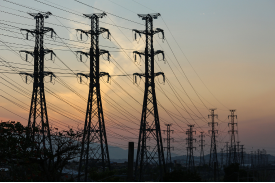
As widely expected, the U.S. Departments of Energy and Commerce announced a major public-private partnership that positions Ohio at the center of the global AI race last week. SoftBank will invest $33.3 billion to develop a 10-gigawatt natural gas facility and massive data center campus at the Portsmouth Gaseous Diffusion Plant in Pike County—expected to be one of the largest projects of its kind globally. Key details: - Construction begins in 2025, with power delivery by 2029
- 4,700 construction jobs and continued environmental cleanup of the former Cold War site
- $4.2 billion in additional transmission investment with AEP Ohio
- New 765-kV transmission line (6x capacity of standard lines) now entering siting and permitting
- Project is part of a broader $550 billion U.S.-Japan agreement
- AEP projects the site will more than double its current demand; PJM forecasts 51 GW of regional demand growth by 2040
|
|
|---|
|
 This project positions Pike County as a major energy and AI hub—potentially a generational win for Appalachian Ohio. The near-term test will be whether Ohio’s siting and transmission permitting process can keep pace with investment at this scale. This project positions Pike County as a major energy and AI hub—potentially a generational win for Appalachian Ohio. The near-term test will be whether Ohio’s siting and transmission permitting process can keep pace with investment at this scale.
|
|
|---|
|
Access our curated list of federal grants, including the DOE Speed to Power through Accelerated Reconductoring and other Key Advanced Transmission Technology Upgrades (SPARK) (up to $250 million) and the DOL Talent Search Program (up to $10 million). Review the list of ongoing grant opportunities, click the link below. |
|
|---|
|
| |
|